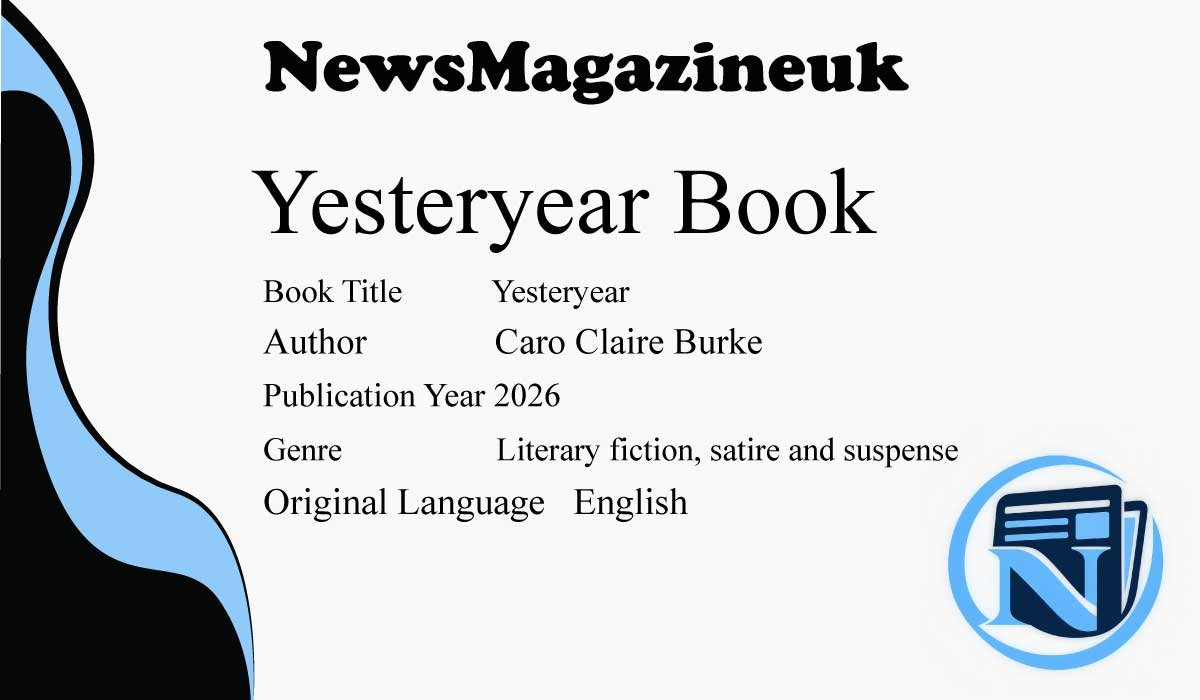
Yesteryear Reviews is a 2026 novel by Caro Claire Burke that explores the contrast between traditional lifestyle ideals and the realities of everyday life. The story follows Natalie Heller Mills, a social media influencer known for presenting an idealised version of traditional American family living. Her circumstances change dramatically when she unexpectedly finds herself in 1855, where modern conveniences are no longer available. The novel combines satire and suspense to examine domestic expectations, online identity and the appeal of an imagined past. It may interest adult readers who enjoy culturally relevant fiction.
Yesteryear Reviews
| Detail | Information |
|---|---|
| Full title | Yesteryear |
| Author | Caro Claire Burke |
| Co-writer | No co-writer listed |
| Publication year | 2026 |
| Publication date | 7 April 2026 |
| Publisher | Alfred A. Knopf |
| Original language | English |
| Country of publication | United States |
| Genre | Literary fiction, satire and suspense |
| Subgenre | Contemporary social satire with a speculative premise |
| Approximate page count | 400 pages |
| Hardcover edition | Available |
| Ebook edition | Available |
| Audiobook edition | Available |
| Main character | Natalie Heller Mills |
| Character’s public identity | Traditional-lifestyle social media influencer |
| Historical setting | 1855 |
| Contemporary setting | Modern influencer culture |
| Central premise | A modern influencer unexpectedly finds herself living in the conditions of the past |
| Major subject | The difference between an idealised online lifestyle and lived reality |
| Social themes | Gender roles, domestic work, family expectations and online identity |
| Narrative approach | Fiction combining satire with suspense |
| Intended audience | Adult readers interested in social commentary and contemporary cultural issues |
| Reading experience | A premise-driven story that questions idealised views of traditional domestic life. Read More Books |
Key Ideas in the Book
The novel’s central ideas emerge through the contrast between the life Natalie promotes and the circumstances she experiences. Rather than simply presenting the past as better or worse than the present, the story questions why certain lifestyles become attractive public ideals. It also examines the pressure to maintain an image, particularly when personal identity becomes part of an online brand. Domestic responsibilities, gender expectations and family life all contribute to this examination. The speculative premise gives these questions a dramatic setting, allowing readers to consider how ideals can change when they must be experienced rather than merely admired.
| Idea | What It Means in the Book | Imagined Situation |
|---|---|---|
| Online Identity | A carefully constructed public image may conceal the complicated reality behind it. | Imagined situation: An influencer shares polished household videos while hiding the work required to produce them. |
| Romanticising the Past | Historical lifestyles can appear appealing when their difficulties are overlooked. | Imagined situation: Someone chooses traditional household methods but discovers how demanding everyday chores can become. |
| Domestic Labour | Homemaking involves practical responsibilities that may be hidden by attractive presentations. | Imagined situation: A person must prepare meals and wash clothes without modern appliances. |
| Gender Expectations | Traditional roles can influence freedom, responsibilities and relationships. | Imagined situation: A woman faces pressure to follow household customs that conflict with her preferences. |
| Family and Public Image | Family life can become part of a public identity carefully shaped for an audience. | Imagined situation: Parents share only carefully selected family moments to maintain a particular online image. |
| Authenticity and Performance | The appearance of an ideal life does not necessarily reveal the complete truth. | Imagined situation: A creator removes evidence of everyday struggles to make a lifestyle appear effortless. |
Who Should Read This Book
| Reader Type | Good Fit? | Reason |
|---|---|---|
| Fans of Social Satire | Yes | The novel questions cultural ideals through an unusual premise. |
| Readers Interested in Influencer Culture | Yes | Its central character presents a lifestyle to a large online audience. |
| Fans of Suspense and Speculative Fiction | Yes | The protagonist’s unexplained circumstances create uncertainty and tension. |
| Readers Seeking Practical Self-Help | No | The book is fiction rather than an instructional guide. |
FAQs
What is Yesteryear about?
The novel follows Natalie Heller Mills, a traditional-lifestyle influencer who unexpectedly finds herself in 1855. Her experience challenges the idealised image of domestic life she has presented publicly.
When was Yesteryear published?
The novel was published in 2026, with a reported publication date of 7 April. Edition-specific details should be checked before publication.
Who wrote Yesteryear?
Caro Claire Burke wrote the novel. It is identified as her debut novel.
What genre is Yesteryear?
It combines fiction, satire and suspense. Its premise explores traditional domestic ideals, gender expectations and the contrast between public image and lived experience.
Is Yesteryear suitable for every reader?
It may appeal to adults who enjoy cultural commentary and thought-provoking fiction. Readers who prefer straightforward realism or practical non-fiction may find its speculative premise less appealing.
Other Books by Caro Claire Burke
- Yesteryear (2026) Her debut novel, exploring traditional domesticity, social media and the realities behind an idealised lifestyle.
Related Books You May Like
- The Stepford Wives by Ira Levin: Examines idealised domestic roles through social satire and suspense.
- The Power by Naomi Alderman: Explores gender authority and the consequences of changing power structures.
- The School for Good Mothers by Jessamine Chan: Examines motherhood, social judgement and institutional expectations.
- The Farm by Joanne Ramos: Explores women’s lives economic pressures and the commercialisation of reproduction.