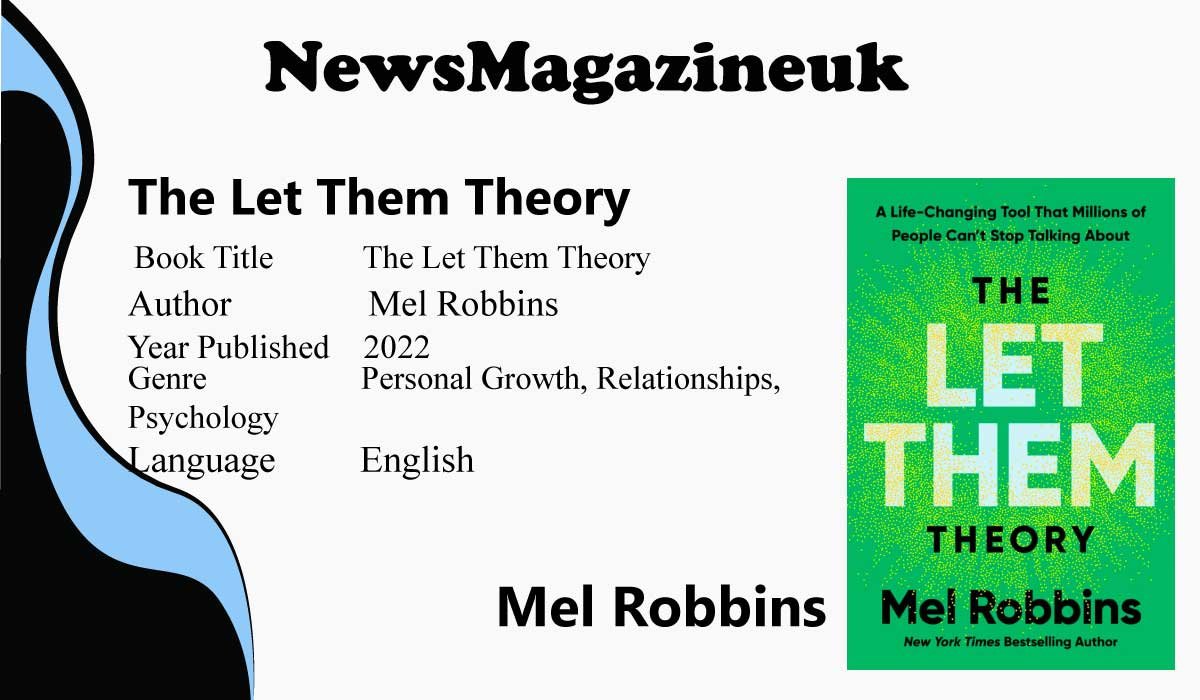
The Let Them Theory Book by Mel Robbins is a self-help book about changing how you respond to other people’s choices, opinions and behaviour. Published in 2024, it introduces a simple principle: allow other people to make their own decisions instead of exhausting yourself trying to control them. The book is aimed at readers who struggle with people-pleasing, comparison, relationship pressures or the need for approval. For a UK audience interested in practical personal development, it offers a framework for reflecting on boundaries, emotional energy and the choices that remain within your control.
The Let Them Theory Book Profile
| Detail | Information |
|---|---|
| Book Title | The Let Them Theory |
| Full Title | The Let Them Theory: A Life-Changing Tool That Millions of People Can’t Stop Talking About |
| Author | Mel Robbins |
| Co-Author | Sawyer Robbins |
| Main Author’s Profession | Author, podcast host, motivational speaker and personal development coach |
| Publication Year | 2024 |
| US Hardcover Publication Date | 24 December 2024 |
| Publisher | Hay House |
| Original Language | English |
| Country of Publication | United States |
| Genre | Personal Growth, Relationships, Psychology |
| Main Topic | Letting go of the need to control other people’s choices and opinions |
| Central Concept | The “Let Them” theory |
| Related Concept | Focusing on your own choices, responses and actions |
| Main Themes | Personal boundaries, emotional well-being, confidence, relationships and self-awareness |
| Primary Focus | Understanding what you can and cannot control in everyday life |
| Intended Audience | Adults interested in personal growth and healthier relationships |
| Recommended For | Readers who struggle with people-pleasing, comparison or seeking approval |
| Writing Style | Accessible, conversational and practical |
| Book Structure | Explanations, personal stories and practical advice; check the relevant edition for its exact contents |
| Practical Application | Reflecting on reactions, setting boundaries and making deliberate personal choices |
| Relationship Focus | Friendships, family relationships, romantic relationships and workplace interactions |
| Personal Development Focus | Self-awareness, independence and taking responsibility for your decisions |
| Psychological Focus | Responses to other people’s behaviour, expectations and opinions |
| Hardcover Length | Approximately 336 pages in the US hardcover edition |
| Paperback Edition | Available; page count can vary by edition |
| Ebook Edition | Available; length and formatting may vary |
| Audiobook Edition | Available; recording length depends on the edition |
| ISBN | Check the specific edition before adding an ISBN |
| UK Edition Details | Publication date, publisher imprint and page count may differ from the US edition |
| Book Cover | Cover design may vary by format and country |
| Series Status | Presented as a standalone self-help book |
| Main Takeaway | You cannot control every other person’s choices, but you can make decisions about your own response |
| Overall Purpose | To help readers reconsider where they direct their attention and emotional energy |
| Estimated Reading Time | Varies according to reading speed and edition |
| Official Author Credit | Mel Robbins and Sawyer Robbins; confirm the exact credit against the edition being reviewed |
| Accuracy Note | Bibliographic details such as ISBN, edition-specific publisher, page count and UK release date should be checked against the exact edition before publication. More Books |
The Let Them Theory Read Book
Article_143690_2025-01-10 by soomoo
Key Ideas in the Book
The book develops its central principle across different areas of everyday life, including friendships, romantic relationships, work and personal ambitions. Its companion idea, often expressed as focusing on what you can do yourself, helps balance acceptance with personal responsibility. The point is not simply to ignore people or tolerate every behaviour; it is to recognise the limits of your influence and make considered choices in response. Robbins also draws on personal stories and research to support the discussion. Readers are encouraged to examine where their attention goes and whether their reactions serve their own priorities.
| Idea | What it means in the book | Imagined situation |
|---|---|---|
| Let other people choose | Accept that other people will make their own decisions, even when you disagree with them. | Imagined situation: A friend declines an invitation, and you accept the decision without repeatedly asking them to change their mind. |
| Focus on your response | Put more attention on your own actions than on trying to manage another person’s behaviour. | Imagined situation: A colleague reacts negatively to your suggestion, so you calmly decide how to proceed rather than trying to win their approval. |
| Reduce people-pleasing | Stop making every decision around the possibility of disappointing someone else. | Imagined situation: You politely decline an extra commitment because you need time for your existing responsibilities. |
| Stop comparing yourself | Avoid allowing other people’s achievements or choices to determine how you judge your own progress. | Imagined situation: Someone celebrates a promotion online, and you focus on your own career goals instead of feeling behind. |
| Build healthier relationships | Recognise that stronger relationships require understanding what you can and cannot influence in another person. | Imagined situation: You express your feelings honestly while allowing a relative to decide how they respond. |
| Take responsibility for your choices | Use the idea of letting others be themselves alongside deciding what you will do next. | Imagined situation: A friend repeatedly cancels plans, so you decide what boundaries you need rather than trying to change their habits. |
Review and Personal Opinion
I like the book’s main strength: it presents a memorable idea that readers can understand quickly and consider applying to ordinary situations. Its focus on personal boundaries and emotional energy makes the message relevant to friendships, family life and workplace relationships. However, the central principle may feel repetitive to readers already familiar with self-help advice about acceptance and personal responsibility. I would also caution against treating it as a universal answer to difficult relationships, where communication and practical action still matter. Overall, I would recommend it to readers seeking an accessible starting point for reflecting on their reactions and choices.
Who Should Read This Book
| Reader type | Good fit? (Yes / Maybe / No) | Reason |
|---|---|---|
| People who often seek approval | Yes | The book encourages readers to reconsider how much other people’s opinions influence their choices. |
| Readers working on personal boundaries | Yes | Its central principle offers a way to reflect on personal responsibility and relationships. |
| Experienced self-help readers | Maybe | The central message may feel familiar if they have already explored similar ideas. |
| Readers seeking a detailed academic psychology textbook | No | It is a practical personal-development book rather than a specialist academic text. |
FAQs
1. What is The Let Them Theory by Mel Robbins about?
The Let Them Theory explores how allowing other people to make their own choices can help you focus on your own decisions. The book applies this principle to relationships, confidence and personal goals.
2. Who co wrote The Let Them Theory?
Mel Robbins’s daughter, Sawyer Robbins, is credited as a co-author of the book.
3. When was The Let Them Theory published?
The US hardcover edition was published on 24 December 2024. Publication dates and page counts may vary across international editions.
4. What are the main lessons of The Let Them Theory?
The main lessons include accepting other people’s choices, reducing the influence of outside opinions and taking responsibility for your own responses. The book also explores relationships, comparison and personal ambitions.
Other Books by Mel Robbins
- Stop Saying You’re Fine (2011): Explores ways to move beyond feeling stuck and start taking action towards personal goals.
- The 5 Second Rule (2017): Introduces a countdown technique designed to encourage action and help readers overcome hesitation.
- The High 5 Habit (2021): Focuses on self-support, confidence and developing a more encouraging relationship with yourself.
Related Books You May Like
- Set Boundaries, Find Peace by Nedra Glover Tawwab: Offers practical guidance on setting boundaries and communicating personal needs.
- The Gifts of Imperfection by Brené Brown: Explores authenticity, self-acceptance and letting go of unrealistic expectations.
- Atomic Habits by James Clear: Explains how small, consistent changes can help readers build habits and work towards their goals.
- Essentialism by Greg McKeown: Encourages readers to focus on what matters most and reduce commitments that distract from their priorities.