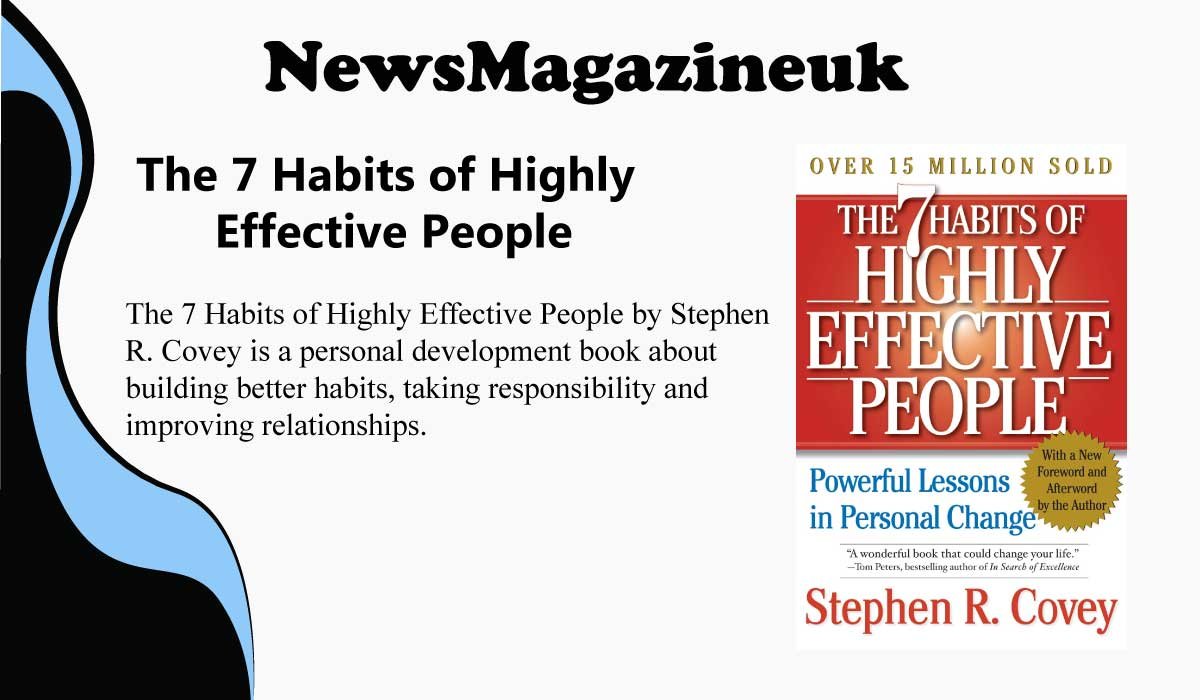
The 7 Habits of Highly Effective People by Stephen R. Covey is a personal development book about building better habits, taking responsibility and improving relationships. First published in 1989, it presents a principle-centred approach to effectiveness in both personal and professional life. Rather than focusing only on productivity tricks, Covey encourages readers to examine their attitudes, priorities and everyday choices. The book is suitable for students, professionals, managers and anyone who wants to become more purposeful, organised and effective.
The 7 Habits of Highly Effective People Summary Book
| Detail | Information |
|---|---|
| Title | The 7 Habits of Highly Effective People |
| Author | Stephen R. Covey |
| Year Published | 1989 |
| Publisher | Free Press, the original US publisher |
| Genre | Personal Development, Leadership, Self-Help |
| Approximate Pages | Around 381 pages in the original US edition; page counts vary by edition |
| Main Subject | Personal effectiveness, leadership and relationships.More Book |
The 7 Habits of Highly Effective People Read Book
The 7 Habits of Highly Effective People: Powerful Lessons in Personal Change by InnerPatch.com
Short Summary
The 7 Habits of Highly Effective People argues that lasting effectiveness begins with the way people think, make decisions and relate to others. Stephen Covey presents personal development as a process of changing underlying habits rather than relying on quick techniques to improve performance. His approach is built around principles such as responsibility, purpose, prioritisation, mutual benefit, understanding and continuous improvement.
The book is organised around seven habits that form a connected framework. The first three focus on personal responsibility and independence. The next three concern relationships and cooperation, while the seventh focuses on renewing the abilities and resources needed to maintain effectiveness.
Covey begins with the idea that people should take responsibility for their choices instead of allowing circumstances to determine every response. He then encourages readers to identify what they want their lives to stand for and use that purpose to guide their decisions. A related principle is learning to distinguish important activities from those that simply demand immediate attention.
The framework then moves from individual effectiveness to working with other people. Covey explores the value of seeking outcomes that benefit everyone involved, listening carefully before trying to persuade someone, and combining different strengths to achieve results that individuals may struggle to produce alone.
The final habit brings attention back to personal renewal. Effectiveness is not presented as a task that can be completed once and forgotten. People need to maintain their physical, mental, social and spiritual well-being to keep developing and contributing over time.
One of the book’s best-known features is its movement from dependence to independence and then to interdependence. This structure connects self-management with the ability to build productive relationships. It suggests that personal responsibility is an important foundation, but mature effectiveness also involves cooperation and respect for others.
The book also distinguishes between a person’s character and the techniques they use to appear successful. Covey places greater emphasis on developing dependable principles and habits than on simply adopting attractive communication methods. For readers, this means that genuine improvement requires consistent choices rather than a temporary change in presentation.
5 Key Lessons
1. Take Responsibility for Your Choices
The first habit, Be Proactive, focuses on taking responsibility for how you respond to circumstances. It encourages readers to recognise that, although they cannot control everything that happens, they can consider their responses and make deliberate choices.
This is not a claim that every problem can be solved through a positive attitude. Rather, it highlights the importance of personal agency within the limits of a situation.
Example scenario (imagined): An employee in Leeds receives critical feedback from a manager. Instead of immediately blaming colleagues or becoming defensive, they consider what they can learn, ask for clarification and decide which changes are within their control.
2. Decide What You Want to Achieve
The second habit, Begin with the End in Mind, encourages readers to define their desired direction before taking action. Covey connects this idea with personal values, long-term aims and the importance of having a clear sense of purpose.
Without a defined direction, it is easy to spend time completing tasks that do not contribute to what matters most.
Example scenario (imagined): A university student wants to build a career in publishing. They use that goal to guide their choices about coursework, writing practice and relevant work experience rather than making decisions solely around what seems easiest in the moment.
3. Put Important Priorities First
The third habit, Put First Things First, builds on having a clear purpose. It focuses on organising actions around priorities instead of allowing urgent demands to consume all available time.
The lesson is especially relevant to people who have busy schedules but struggle to make progress on their most important long-term goals.
Example scenario (imagined): A small-business owner spends much of the day responding to messages and minor requests. They reserve a regular block of time for planning and improving the business, while still allowing space for genuinely urgent problems.
4. Look for Outcomes That Benefit Everyone
The fourth habit, Think Win-Win, encourages people to seek solutions that respect the interests of all parties. It moves away from the assumption that one person must lose for another to succeed.
A win-win approach does not mean every disagreement can be resolved to everyone’s satisfaction. It means looking for fair, workable outcomes rather than automatically treating relationships as competitions.
Example scenario (imagined): Two colleagues disagree about how to divide a project. They discuss their workloads, strengths and deadlines, then negotiate responsibilities that allow both to contribute effectively without placing an unfair burden on either person.
5. Listen Before Trying to Be Understood
The fifth habit, Seek First to Understand, Then to Be Understood, emphasises listening carefully before offering advice or arguing for your own position. Understanding another person’s perspective can reveal concerns that would otherwise be overlooked.
This habit treats communication as more than speaking clearly. It requires attention, patience and a willingness to consider information that may challenge your initial assumptions.
Example scenario (imagined): A team leader notices that a member of staff has become less engaged. Rather than immediately assuming a lack of commitment, the leader arranges a conversation, listens to the employee’s concerns and then discusses possible solutions.
What I Liked
I like the way Covey connects personal responsibility with a broader sense of purpose. The book does not treat effectiveness as simply completing more tasks each day. Its focus on choices, values and priorities encourages readers to consider whether their actions are moving them towards the kind of life and work they actually want.
I also appreciate the connection between individual habits and relationships. The emphasis on mutual benefit, listening and cooperation makes the framework relevant beyond personal productivity. These ideas can be applied to leadership, teamwork, family relationships and everyday conversations without requiring readers to follow a complicated technical system.
What Could Be Better
I find the framework more useful as a long-term philosophy than as a quick practical guide. Readers looking for a short daily routine, a simple weekly planning template or immediate productivity techniques may need additional resources. The habits provide a way to think about effectiveness, but applying them consistently still requires personal effort and judgement.
Some of the book’s principles may also feel familiar to modern readers who have already explored leadership and personal development. Its explanations can require reflection rather than offering an immediate solution to a specific problem. I would recommend approaching it as a framework to revisit and apply gradually, not as a promise that following seven habits will automatically resolve every challenge.
Who Should Read This Book (and Who Should Skip It)
Who should read it?
- Students: Those who want to develop clearer goals and more responsible habits.
- Professionals: Readers looking to improve prioritisation, communication and collaboration.
- Managers and team leaders: People interested in leadership built around trust and mutual benefit.
- Personal development readers: Anyone who wants a structured approach to examining habits and values.
Who might skip it?
- Readers seeking quick productivity hacks: The book focuses on principles and long-term development rather than shortcuts.
- People wanting a highly technical management manual: It is a personal effectiveness framework, not a specialised guide to business operations.
- Readers who prefer very short books: Its detailed explanations and reflective approach may require more time and attention than a brief self-help guide.
Similar Books You May Like
- Atomic Habits by James Clear Explores how small behavioural changes can help people develop and maintain habits.
- How to Win Friends and Influence People by Dale Carnegie Focuses on communication, relationships and working effectively with others.
- The Effective Executive by Peter F. Drucker Examines effectiveness, decision-making and priorities in professional work.
FAQs
Q1. What is The 7 Habits of Highly Effective People about?
It teaches habits that can improve personal effectiveness, relationships, leadership, and decision making.
Q2. What are the seven habits in Stephen Covey’s book?
They focus on proactivity, goal-setting, prioritisation, mutual benefit, understanding others, teamwork, and self-renewal.
Q3. Who should read The 7 Habits of Highly Effective People?
It is useful for students, professionals, managers, and anyone seeking personal growth.
Q4. Is The 7 Habits of Highly Effective People worth reading?
Yes, it provides practical principles for building better habits, improving relationships, and achieving long-term goals.
Final Verdict
The 7 Habits of Highly Effective People remains a significant personal development book because it connects everyday choices with long-term purpose and relationships. Stephen Covey’s framework encourages readers to take responsibility, establish priorities, listen more carefully and work constructively with others. It is not a shortcut to success, but it can provide a useful structure for people who are willing to reflect on their behaviour and practise new habits over time.