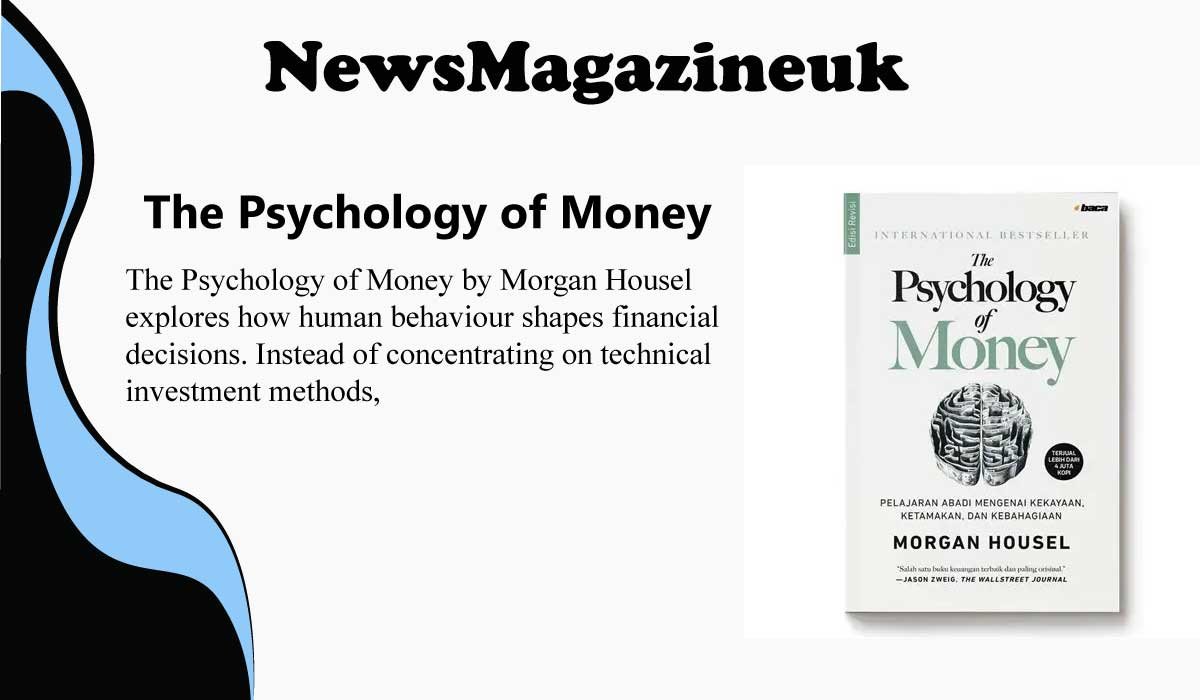
The Psychology of Money by Morgan Housel explores how human behaviour shapes financial decisions. Instead of concentrating on technical investment methods, the book examines the attitudes, emotions and experiences that influence how people earn, save, spend and invest. It is written for readers who want to understand money beyond numbers and financial calculations. For UK readers, its ideas offer a useful starting point for thinking about personal savings, long-term investing and financial independence, although UK-specific financial rules require separate guidance.
The Psychology of Money Book
| Detail | Information |
|---|---|
| Title | The Psychology of Money |
| Author | Morgan Housel |
| Year Published | 2020 |
| Publisher | Harriman House |
| Genre | Personal finance and behavioural finance |
| Approximate Pages | 256 pages; edition-dependent |
| Main Subject | Human behaviour and financial decision-making.More Books |
The Psychology of Money Read Book
The Psychology of Money by Morgan Housel Urdu by umairbhattiskpk
Short Summary
The Psychology of Money makes the case that financial outcomes depend on more than intelligence, technical knowledge or the ability to calculate investment returns. The way people behave with money can have a lasting effect on their financial lives. Personal experiences, expectations, emotions and attitudes toward risk all influence decisions, meaning that two people can look at the same financial situation and respond very differently.
Morgan Housel develops this argument through short essays and examples that connect money with human behaviour. The book does not present wealth as a simple result of following a mathematical formula. Instead, it examines why patience, reasonable expectations and an understanding of uncertainty matter when making financial decisions.
One of its best-known ideas is the distinction between getting wealthy and staying wealthy. Building wealth may involve taking opportunities and accepting some uncertainty, while keeping it requires recognising that favourable circumstances can change. Financial success is therefore not only about achieving gains; it is also about avoiding losses that could seriously damage long-term progress.
Another important theme is the role of compounding. Housel explains why allowing financial growth to continue over long periods can be powerful. The lesson is not that investments always increase in value, but that time can make a meaningful difference when returns are retained and growth continues.
The book also challenges the assumption that visible spending is a reliable sign of wealth. Expensive possessions may show what someone has purchased, but they cannot tell us how much that person has saved or how financially secure they are. Money that has not been spent can preserve choices and provide flexibility.
A further theme is the value of having enough. Financial decisions can become destructive when people continually compare themselves with others or take unnecessary risks in pursuit of more. Housel encourages readers to think about what they genuinely need rather than treating wealth as an endless competition.
Together, these ideas make the book less about finding a perfect investment and more about developing a realistic attitude towards financial life. Its central message is that understanding our own behaviour can help us make better decisions, even when markets and circumstances remain uncertain.
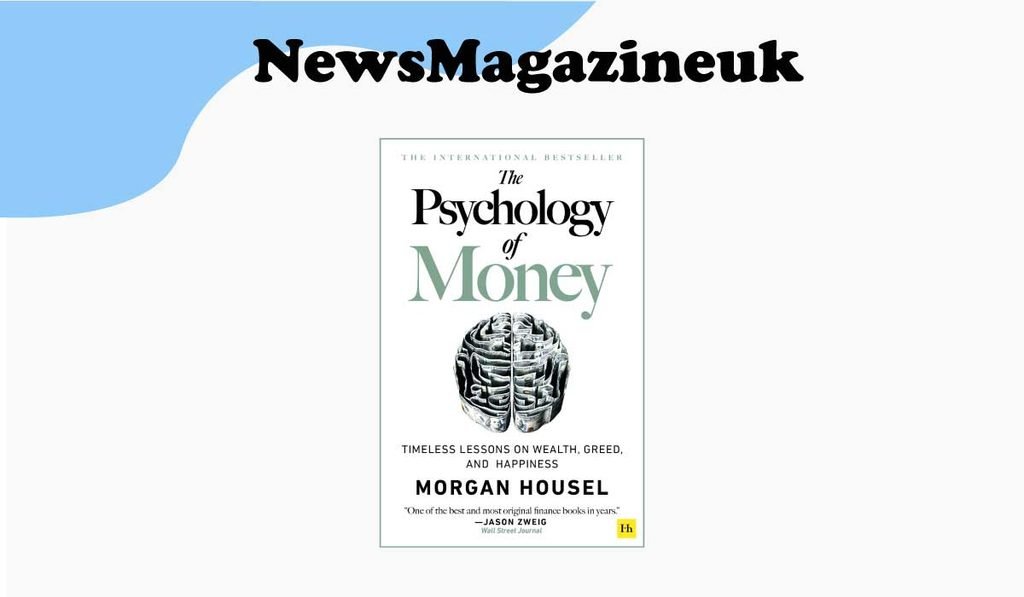
5 Key Lessons
1. Behaviour Can Matter More Than Financial Knowledge
Understanding financial concepts does not automatically make someone good at managing money. Fear, greed, impatience and overconfidence can influence decisions even when a person knows the theory. Housel’s approach places considerable importance on developing behaviour that can withstand uncertainty.
Example scenario (imagined): A UK investor sees the value of their investments fall and feels tempted to abandon their long-term plan immediately. Rather than reacting without considering their circumstances, they review their goals, investment horizon and ability to tolerate risk.
2. Getting Wealthy and Staying Wealthy Are Different Challenges
The book distinguishes between accumulating wealth and preserving it. The circumstances that help someone make money do not necessarily protect them from future setbacks. Remaining financially secure requires recognising that luck, risk and changing conditions can influence outcomes.
Example scenario (imagined): A business owner experiences several successful years and considers committing nearly all their savings to a new venture. Remembering that success does not remove uncertainty, they consider what a substantial loss would mean for their financial future before deciding.
3. Compounding Needs Time
Housel highlights the importance of long-term growth and the benefits that can emerge when returns remain invested. The effect of compounding is not always obvious over short periods, which can make patience difficult. Nevertheless, the principle helps explain why the length of time money remains invested can matter.
Example scenario (imagined): Someone begins investing a manageable amount each month and avoids judging progress after only a few months. They understand that long-term results depend on several factors, including investment performance, costs, consistency and time.
4. Wealth Is Not the Same as Looking Rich
The book questions the habit of judging financial success through possessions. Spending can be visible, while savings and financial independence are often hidden. This distinction encourages readers to think about what money enables them to do rather than focusing only on what it allows them to buy.
Example scenario (imagined): Two friends have similar incomes, but one regularly spends to maintain an expensive lifestyle while the other keeps spending aligned with personal priorities. Their possessions alone cannot establish who has greater wealth; their savings, debts and other financial commitments also matter.
5. Knowing What Is Enough Can Protect You
Housel explores the danger of continually wanting more. Comparing financial progress with other people’s achievements can encourage decisions that expose someone to risks they do not need to take. Recognising personal limits and priorities can help make financial choices more sustainable.
Example scenario (imagined): An employee receives a pay rise and begins considering increasingly expensive purchases because colleagues have similar lifestyles. They pause to consider whether the extra spending supports their own goals or is mainly driven by comparison.
What I Liked
I like that the book looks at money from a human perspective rather than treating every financial decision as a calculation. Its discussion of behaviour, patience, risk and personal expectations makes the subject easier to relate to everyday life. I also find the distinction between visible spending and genuine financial security particularly useful because it challenges a common way of judging success.
Another strength is the book’s emphasis on uncertainty. It does not require readers to believe that every financial outcome can be predicted or controlled. I appreciate this realistic approach because it encourages a more thoughtful attitude towards long-term decisions instead of making financial success sound simple or guaranteed.
What Could Be Better
I would have liked more step-by-step guidance for readers who want to turn the book’s ideas into a detailed financial plan. Its main strength is explaining how people think about money, rather than providing a practical manual for choosing investments, comparing pensions or organising a household budget. Beginners may therefore need another.
FAQs: The Psychology of Money
Q1. What is The Psychology of Money about?
It explains how human behaviour influences financial decisions, saving, and building wealth.
Q2. What are the main lessons of The Psychology of Money?
The book highlights patience, saving consistently, managing risk, and the power of compounding.
Q3. Who should read The Psychology of Money?
It is ideal for readers who want to improve their financial habits and understand money management.
Q4. Is The Psychology of Money worth reading?
Yes it offers practical insights into making better financial decisions and developing a healthier relationship with money.
Final Verdict
The Psychology of Money is a worthwhile read for people who want to understand why financial success involves more than earning a high income or choosing investments. Morgan Housel’s discussion of behaviour, compounding, uncertainty and the meaning of wealth offers a useful foundation for making more considered financial decisions. Although readers may need other resources for practical financial planning, the book provides plenty to think about when developing a healthier relationship with money. This article is for general information only and is not professional advice.